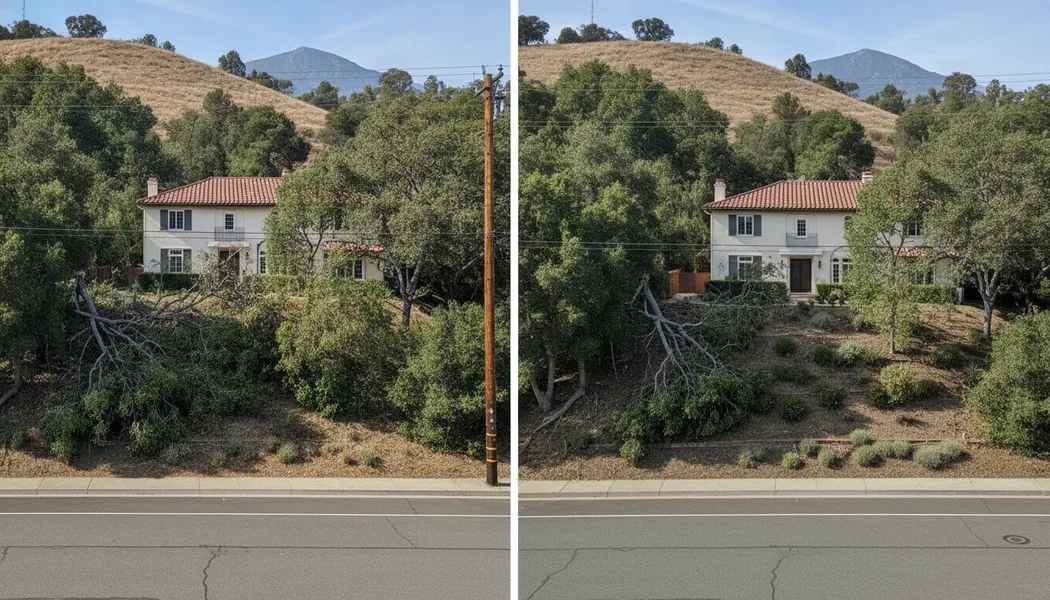
Why Wildfire Risk Is Real in San Ramon and the Diablo Foothills
Every summer and fall, residents living near the Diablo Foothills face a familiar anxiety: dry winds, golden hillsides, and the ever-present threat of wildfire. San Ramon sits at the edge of a fire-prone landscape, where neighborhoods like Canyon Lakes and Gale Ranch back up against open grasslands and oak woodlands that can ignite quickly under the right conditions. The combination of hot temperatures, low humidity, and seasonal Diablo winds creates a recipe for rapid fire spread that homeowners should take seriously.
Contra Costa County has seen firsthand how fast a fire can move through dry vegetation. While San Ramon has been fortunate compared to some neighboring communities, the risk is not theoretical. Homes in the wildland-urban interface, where residential development meets undeveloped natural land, face the highest exposure. Understanding that risk is the first step toward doing something meaningful about it, and the good news is that the actions you take on your own property can make a genuine difference.
What Defensible Space Actually Means for Your Property
Defensible space is the buffer you create between your home and the vegetation, trees, and other combustible materials that surround it. California law requires homeowners in designated fire hazard severity zones to maintain defensible space, but beyond legal compliance, it is simply smart risk management. The concept is straightforward: a fire spreading across a hillside needs continuous fuel to keep moving. When you remove or reduce that fuel near your home, you slow the fire down and give firefighters a safer place to work if they need to defend your property.
The state divides defensible space into two main zones. Zone 1 extends 30 feet from your home and requires removing dead plants, dry leaves, and debris, as well as keeping trees trimmed so branches do not hang over your roof or touch your house. Zone 2 extends from 30 to 100 feet (or to your property line) and focuses on reducing the density of vegetation so fire cannot travel as easily from one plant or tree to the next. Both zones require ongoing attention, not just a one-time cleanup before fire season. Trees play a central role in both zones, and managing them properly is one of the most impactful things a homeowner can do.
Tree Care Practices That Reduce Wildfire Risk Near Me
The trees on your property are not just beautiful features of your landscape. During fire season, they can act as ladders that carry ground-level flames up into the canopy and onto your roof. Proper Tree Trimming & Pruning is one of the most effective fire mitigation tools available to homeowners. Specifically, removing the lower branches of trees, a practice known as crown lifting or limbing up, prevents fire from climbing from ground-level brush into the tree canopy. A general guideline is to remove branches up to 6 to 10 feet from the ground, though the right height depends on the tree species and its size.
Beyond limbing up, spacing matters. Trees that are planted too close together allow fire to jump from crown to crown with very little resistance. A certified arborist can evaluate your property and recommend whether certain trees should be thinned or repositioned over time to reduce this risk. Dead or dying trees are especially dangerous because they contain dry, highly flammable wood throughout their entire structure. Addressing these trees with Tree Removal before fire season arrives is a straightforward way to eliminate a significant hazard. Once a tree is removed, the remaining stump should also be addressed. Stumps left in the ground can harbor dry debris and pose a tripping hazard during an evacuation. Stump Grinding eliminates the leftover material cleanly and completely.
Choosing the Right Trees and Maintaining What You Have
Not all trees carry the same fire risk. Some species, like eucalyptus, are notoriously flammable because of the oils in their leaves and their tendency to shed large amounts of dry bark and debris. Others, like certain oaks and maples, are considered relatively fire-resistant because of their higher moisture content and bark characteristics. If you are planting new trees on your property, choosing lower-flammability species is a smart long-term investment, especially for locations close to your home or along the edges of your property where fire exposure is greatest.
For the trees you already have, consistent maintenance is the key. This means scheduling annual or biannual pruning to remove dead wood, crossing branches, and any growth that extends toward your roofline or gutters. It also means keeping the area beneath your trees clear of dry leaves, fallen branches, and accumulated debris, all of which serve as ready fuel. In Dougherty Valley and other neighborhoods that sit close to open space, this kind of regular upkeep is especially important because wind-driven embers can travel significant distances and ignite even small amounts of dry material near a home. A licensed arborist familiar with local conditions can help you build a maintenance schedule that keeps your trees healthy while reducing their fire risk profile.
When an Emergency Strikes: Storm Damage and Post-Fire Tree Hazards
Wildfire season does not just bring fire. The same dry, gusty conditions that elevate fire risk can also cause significant wind damage to trees. A large branch falling on a roof, a fence, or a vehicle is a serious problem that requires immediate attention. When storm or wind damage occurs, it is not safe to attempt removal on your own, particularly if the branch or tree is tangled with power lines or leaning against a structure. Calling for Emergency Tree Service is the right move in these situations. A trained crew with the proper equipment can assess the hazard and resolve it safely, often within hours.
After a wildfire has moved through an area, the trees left standing may look intact but can be structurally compromised in ways that are not immediately visible. Heat damage can kill a tree from the inside out, weakening the wood and making the tree susceptible to falling weeks or even months after the fire. If your property has been near a fire event, having a certified arborist inspect your trees before assuming they are safe is a responsible and potentially life-saving step. Early identification of hazard trees allows for planned removal rather than an emergency response after the tree has already fallen.
Getting Started with Defensible Space Preparation in San Ramon
Preparing your property for wildfire season does not have to feel overwhelming. The most effective approach is to start early, ideally in late winter or early spring before vegetation dries out, and work systematically through each zone of your defensible space. Begin closest to your home and work outward. Address dead or damaged trees first, then move on to pruning, debris removal, and spacing adjustments. If your property has a significant number of trees or is located in a high-risk area near open space, partnering with a professional tree service is the most efficient way to get the work done correctly and safely.
San Ramon Tree Service has experience working with homeowners throughout San Ramon and the surrounding communities to prepare properties for fire season. Whether you need a full property assessment, targeted pruning, hazard tree removal, or stump grinding to finish the job cleanly, our team is ready to help. If you would like to discuss your specific situation and get a free estimate, reach out to us today. You can also call us directly at (925) 940-2115 to speak with someone about your property. Taking action now, before fire season peaks, is the best investment you can make in your home and your family's safety.
Looking for a professional tree service in San Ramon? San Ramon Tree Service responds fast for all your tree service needs.
Get a Free QuoteOur services: Tree Removal · Tree Trimming & Pruning · Stump Grinding